Best Fitness Equipment for a Better Home Workout: A Complete Guide to Choosing the Right Gear
Best Fitness Equipment for a Better Home Workout: A Complete Guide to Choosing the Right Gear
Creating a comfortable workout space at home does not necessarily require a large room filled with expensive machines. The right fitness equipment depends on your goals, available space, budget, experience, and the types of activities you actually enjoy.
Some people prefer simple equipment that can be stored in a drawer or closet. Others want a dedicated home gym with larger machines for cardio and strength training. There is no single piece of exercise equipment that is perfect for everyone.
The most useful approach is to understand what different types of fitness gear are designed to do. Once you know their purpose, you can choose equipment that fits naturally into your routine rather than buying products that remain unused.
From resistance bands and dumbbells to exercise mats and cardio machines, today's fitness equipment provides many ways to make home workouts more convenient.
This guide explores the main categories of workout equipment, what each one can offer, how to choose wisely, and how to create a practical home fitness setup.
Start With Your Fitness Goals
Before purchasing any equipment, decide what you want your workouts to help you accomplish.
Your goals could include improving general fitness, building strength, developing cardiovascular endurance, improving mobility, supporting balance, or simply becoming more active during the week.
Different goals require different equipment.
For example, resistance bands and dumbbells can be useful for strength exercises, while jump ropes and cardio machines can provide ways to increase cardiovascular activity. An exercise mat can make floor-based movements more comfortable.
You do not need equipment for every possible type of exercise.
Start with the activities you are most likely to do consistently. Equipment is useful when it makes exercise easier, more comfortable, or more enjoyable—not simply because it looks impressive.
Key idea: Choose fitness equipment according to your actual workout goals rather than buying everything at once.
Resistance Bands for Flexible Strength Workouts
Resistance bands are among the most versatile pieces of home workout equipment.
They are lightweight, relatively easy to store, and available in different resistance levels. They can be used for a variety of exercises involving the upper and lower body.
One advantage of resistance bands is that they can provide resistance without requiring large weights. This makes them convenient for people who have limited space.
Different types of bands are available, including loop bands, tube bands, and longer resistance bands. Some include handles, while others are designed to be used around the legs or body.
Beginners should start with a resistance level that allows them to perform exercises with controlled movement and appropriate technique.
Resistance bands can also be useful when traveling because they take up little space compared with many traditional pieces of exercise equipment.
Best for: Home strength workouts, mobility exercises, travel, and small spaces.
Dumbbells for Everyday Strength Training
Dumbbells are another popular choice for home fitness.
A pair of dumbbells can be used for many exercises, making them a practical option for people who want to add resistance to their workouts.
Fixed dumbbells come in different weights, while adjustable dumbbells allow users to change the resistance using one set.
If you are new to strength training, learning proper movement technique is more important than simply choosing heavier equipment.
A suitable dumbbell should allow you to maintain controlled movement and good form for the exercises you perform.
Dumbbells can also be combined with bodyweight movements to create varied workouts.
Because they are available in different sizes, consider your available storage space before purchasing several sets.
Best for: Strength training, home workouts, and versatile exercise routines.
An Exercise Mat for Comfortable Floor Work
An exercise mat is a simple piece of equipment that can make home workouts more comfortable.
Floor exercises may place pressure on areas such as the knees, hands, elbows, or back. A suitable mat can provide cushioning and create a dedicated workout surface.
Exercise mats are useful for activities such as stretching, yoga, mobility exercises, floor-based strength movements, and general fitness routines.
When choosing a mat, consider its thickness, size, grip, material, and ease of cleaning.
A mat that moves around during exercise can be distracting, so stability is an important feature.
You do not need an expensive mat for basic home workouts. Choose one that provides appropriate comfort and is easy to maintain.
Best for: Yoga, stretching, mobility work, floor exercises, and home workouts.
Jump Ropes for Simple Cardio Training
A jump rope is a small but useful piece of cardio equipment.
It requires very little storage space and can be used in suitable indoor or outdoor environments. Jumping rope can increase heart rate and provide a challenging cardiovascular activity.
However, beginners should start gradually. Jumping repeatedly can place stress on the lower body, so technique, suitable footwear, and an appropriate exercise surface matter.
The rope should also be an appropriate length for the user.
Jump ropes can be especially useful for people who want simple equipment without investing in a large cardio machine.
Best for: Cardiovascular exercise, coordination, and compact workout spaces.
Exercise Bikes for Indoor Cardio
An exercise bike can be a useful choice for people who prefer cycling but want to exercise indoors.
Stationary bikes come in different designs and price ranges. Some provide basic resistance adjustment, while more advanced models may offer digital displays, programmed workouts, or connected features.
One major advantage of an exercise bike is convenience. You can use it indoors regardless of outdoor weather conditions.
Before purchasing one, consider its size and available storage space. It is also worth checking whether the seat and handlebars can be adjusted comfortably.
The best machine is one you will actually use regularly.
Best for: Indoor cycling, cardiovascular workouts, and people who prefer cycling-based exercise.
Treadmills for Walking and Running
Treadmills are among the most recognizable pieces of home cardio equipment.
They provide an indoor surface for walking or running and can be useful when outdoor conditions make exercising less convenient.
However, treadmills require significantly more space than compact equipment such as resistance bands or jump ropes.
Before buying one, measure your available area carefully. Consider the machine's dimensions, storage requirements, noise level, and safety features.
If you live in a smaller home or apartment, a large treadmill may not be the most practical option.
For some users, walking outdoors may provide an easier and more affordable alternative.
Best for: Indoor walking and running.
Kettlebells for Dynamic Workouts
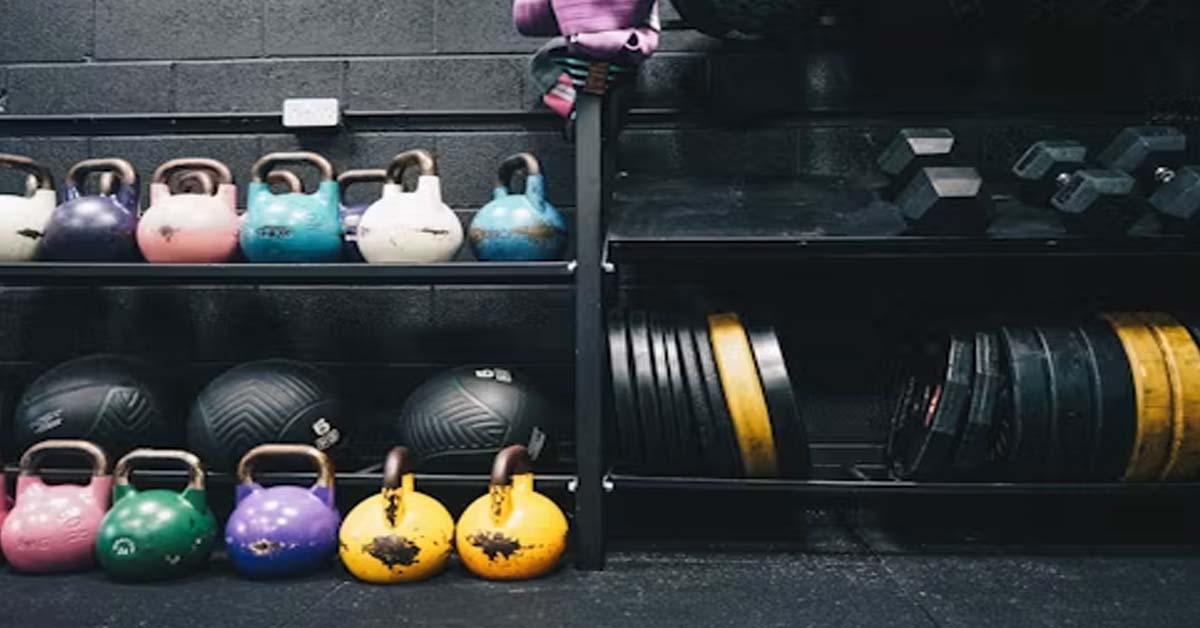
Kettlebells are compact weights with a handle and can be used for various strength and conditioning exercises.
Their design allows users to perform movements that involve multiple parts of the body.
Because some kettlebell exercises involve dynamic movements, beginners should learn appropriate technique before attempting more complex exercises.
Start with exercises that match your experience level and use a suitable weight.
Kettlebells can be particularly useful for people who want a small amount of equipment that can support a variety of movements.
Best for: Strength and conditioning workouts when used with appropriate technique.
Stability Balls for Balance and Core Exercises
Stability balls, sometimes called exercise balls, can be used for certain balance, mobility, and core-focused exercises.
They are also sometimes used as part of stretching or rehabilitation programs under professional guidance.
Because stability balls can move unexpectedly, users should make sure they have enough clear space around them.
Choose a ball designed for your intended use and follow the manufacturer's sizing recommendations.
Beginners should start with simple movements before attempting more challenging exercises.
Best for: Balance exercises, selected core movements, stretching, and mobility work.
Foam Rollers for Recovery and Mobility
Foam rollers are common fitness accessories used by many people as part of warm-up or recovery routines.
They can provide a form of self-massage and may be used to work on areas of muscle tightness.
However, foam rolling should not be treated as a replacement for professional care when pain or injury is present.
Different rollers vary in firmness, texture, and size. Beginners may prefer a simpler, less aggressive design.
If an exercise or recovery technique causes significant pain, stop and seek appropriate professional guidance.
Best for: Mobility routines and general recovery practices.
Pull-Up Bars for Upper-Body Training
A pull-up bar can provide an option for upper-body strength exercises.
Some bars are designed to be installed in door frames, while others are freestanding.
Safety should be a major consideration. Always check the product's installation requirements and weight specifications before use.
A poorly installed bar can create unnecessary risk, so follow the manufacturer's instructions carefully.
Pull-up bars may not be suitable for every home or doorway. Check the structure and dimensions of the intended location.
Best for: Upper-body strength training when safely installed and used.
Adjustable Benches for a More Flexible Home Gym
A workout bench can expand the number of exercises you can perform with dumbbells and other equipment.
Some benches are flat, while adjustable models allow different angles.
An adjustable bench can be useful in a larger home gym because it can support several types of strength exercises.
However, benches take up more space than compact equipment.
When choosing one, look at its stability, weight capacity, adjustment mechanism, padding, and overall construction.
A sturdy and appropriately rated bench is more important than having numerous unnecessary features.
Best for: Home strength training and dumbbell workouts.
How to Choose Fitness Equipment for a Small Space
Limited space does not mean you cannot create a useful workout area.
In a small room, prioritize equipment that is compact, easy to store, and useful for multiple exercises.
Resistance bands, adjustable dumbbells, exercise mats, and jump ropes can provide several workout possibilities without requiring much floor space.
Foldable equipment can also be useful, provided it is stable and suitable for its intended use.
Before purchasing anything, measure your available space.
Do not forget to consider storage. Equipment that constantly remains in the middle of a room may become inconvenient.
A simple storage system can help keep your workout area organized.
How to Choose Fitness Equipment on a Budget
A home gym does not have to cost a fortune.
Start with equipment that supports multiple exercises instead of buying specialized products for every movement.
For example, a suitable exercise mat, resistance bands, and a pair of appropriately selected dumbbells can provide a foundation for many home workouts.
As your routine develops, you can decide whether additional equipment would genuinely be useful.
When comparing products, look beyond the price tag. Consider durability, safety, warranty information, dimensions, adjustability, and user instructions.
The cheapest product is not always the best value if it needs to be replaced quickly.
At the same time, an expensive product is not automatically better.
Smart buying means purchasing equipment you will actually use.
Consider Equipment Quality and Safety
Safety should come before appearance or advanced features.
Before buying fitness equipment, check the manufacturer's specifications and instructions.
For larger equipment, make sure you have enough space around the machine for safe movement.
For weights and resistance equipment, verify that the product is appropriate for the intended use.
Inspect equipment regularly for signs of damage. Cracked handles, worn bands, unstable benches, damaged cables, or other defects may mean the equipment needs replacement.
Do not modify equipment in ways that are not recommended by the manufacturer.
Following basic safety instructions can make home workouts more comfortable and reduce unnecessary risks.
Technology Can Make Workouts More Engaging
Modern fitness equipment increasingly includes technology.
Some treadmills, bikes, rowing machines, and other devices have screens, workout programs, activity tracking, or smartphone connectivity.
Technology can be useful for tracking progress or making workouts more engaging.
However, you do not need a connected machine to exercise effectively.
A simple piece of equipment can still be valuable if it supports a consistent routine.
Consider whether you genuinely need advanced digital features before paying extra for them.
Do Not Forget Simple Workout Accessories
Fitness equipment is not limited to large machines and weights.
Several small accessories can improve organization and convenience.
Examples include:
- Workout towels
- Water bottles
- Exercise mats
- Storage racks
- Resistance bands
- Jump ropes
- Training gloves where appropriate
- Fitness timers
- Cleaning supplies
- Suitable workout footwear
The right accessories depend on your activities.
Avoid purchasing products simply because they are marketed as essential. Think about what will actually improve your workout experience.
Create a Balanced Home Fitness Setup
You do not need separate equipment for every part of fitness.
A balanced home setup can combine several types of movement.
For example, a simple setup could include an exercise mat, resistance bands, and adjustable dumbbells. Someone with more space might add an exercise bike or treadmill.
Your setup should reflect your interests.
If you enjoy walking, investing heavily in specialized strength equipment may not make sense. If you enjoy resistance training, compact weights and bands may be more useful.
The best home gym is not necessarily the largest one.
It is the one that encourages you to exercise regularly and safely.
Common Mistakes When Buying Exercise Equipment
Buying fitness equipment without a plan can lead to wasted money and unused products.
One common mistake is purchasing equipment based entirely on trends. A product may be popular online but still not suit your routine.
Another mistake is ignoring available space. A machine that looks ideal in a showroom may become difficult to use in a small room.
Some people also purchase equipment that is too advanced for their current experience level.
Instead, choose equipment that matches your abilities and learn how to use it correctly.
Finally, avoid believing unrealistic marketing claims. No single machine or accessory can replace consistent physical activity, appropriate nutrition, adequate rest, and healthy lifestyle habits.
Maintain Your Fitness Equipment Properly
Taking care of your equipment can help keep it functional and hygienic.
Wipe down surfaces according to the manufacturer's recommendations, especially equipment that is frequently touched.
Store smaller items in a dry and organized location.
Check moving parts and fasteners when the manufacturer recommends doing so.
Resistance bands deserve particular attention because damaged elastic material can become unsafe. Inspect them before use and replace them if they show significant deterioration.
For larger machines, follow the maintenance schedule provided by the manufacturer.
Good maintenance can help extend equipment life and provide a safer workout environment.
Build Your Routine Around Consistency
Equipment alone does not create fitness.
You can own an impressive home gym and still struggle to maintain a routine if your workouts are unrealistic.
Start with activities that fit naturally into your schedule.
Set reasonable expectations and allow yourself time to develop consistency.
You can combine different activities depending on your interests. For example, walking can provide general movement, while resistance bands can add strength exercises and an exercise mat can support stretching or mobility work.
The goal is not to use every piece of equipment every day.
The goal is to create a sustainable routine that supports your overall wellbeing.
Frequently Asked Questions About Fitness Equipment
What fitness equipment is best for beginners?
There is no single best option for everyone. Compact equipment such as an exercise mat, resistance bands, and appropriately selected dumbbells can be practical starting points for many people.
Is expensive gym equipment necessary?
No. Many effective forms of exercise require little or no equipment. Expensive machines can be convenient, but they are not automatically necessary.
What equipment is best for a small home?
Compact and easy-to-store options such as resistance bands, adjustable weights, exercise mats, and jump ropes can work well when space is limited.
Should I buy equipment before starting exercise?
It is often better to begin with activities you enjoy and then purchase equipment that supports those activities. This can help prevent unnecessary spending.
How often should fitness equipment be replaced?
Replacement depends on the product, how frequently it is used, its condition, and the manufacturer's recommendations. Inspect equipment regularly and replace damaged items.
Final Thoughts
Choosing the right fitness equipment is less about building the biggest home gym and more about creating an environment that makes regular physical activity practical.
Resistance bands, dumbbells, exercise mats, jump ropes, kettlebells, stability balls, exercise bikes, treadmills, and other equipment all have different purposes. The right choice depends on your goals, available space, budget, experience, and preferred activities.
Start small if necessary. Choose versatile equipment, learn how to use it properly, maintain it regularly, and prioritize safety.
Most importantly, remember that equipment is only a tool. A simple piece of fitness gear that you use consistently can be far more valuable than an expensive machine that sits unused.
A practical home fitness setup should make exercise easier to approach, not more complicated. With thoughtful choices and a realistic routine, you can create a workout environment that supports an active and healthy lifestyle.